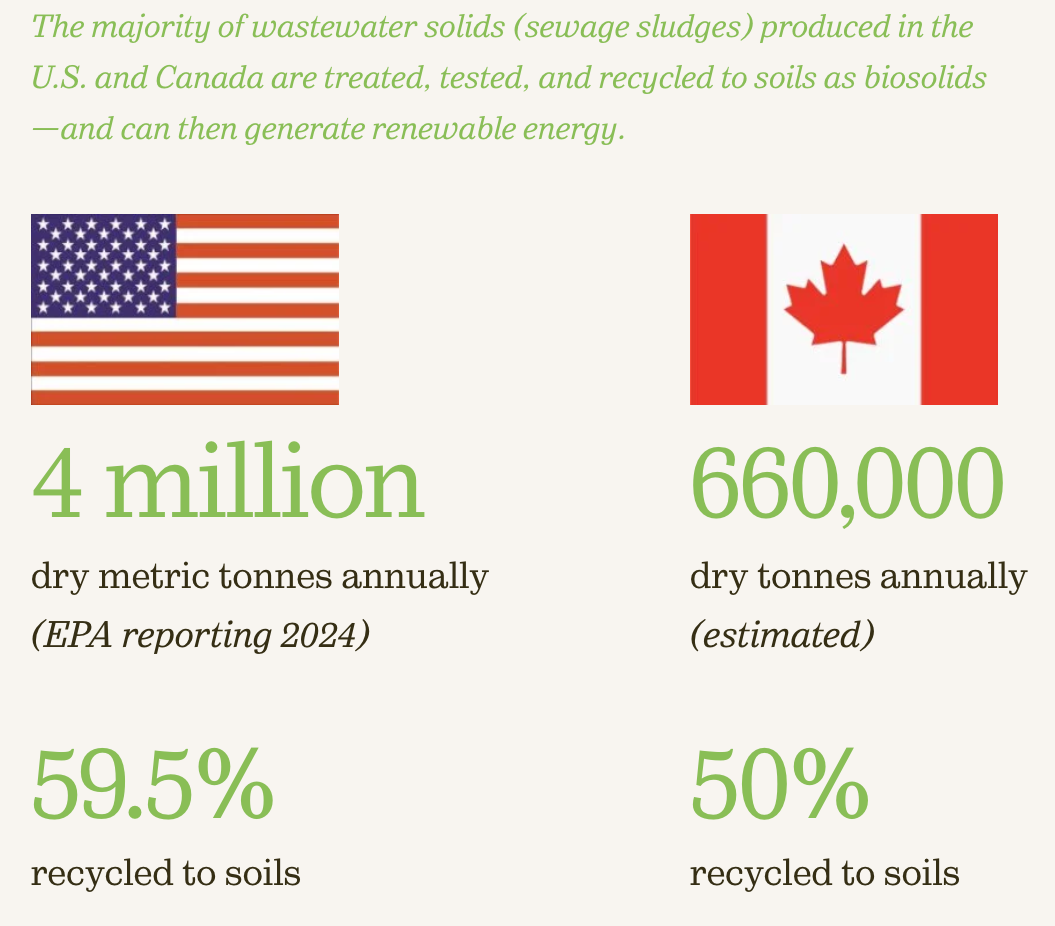
Recycling biosolids benefits society and the environment.
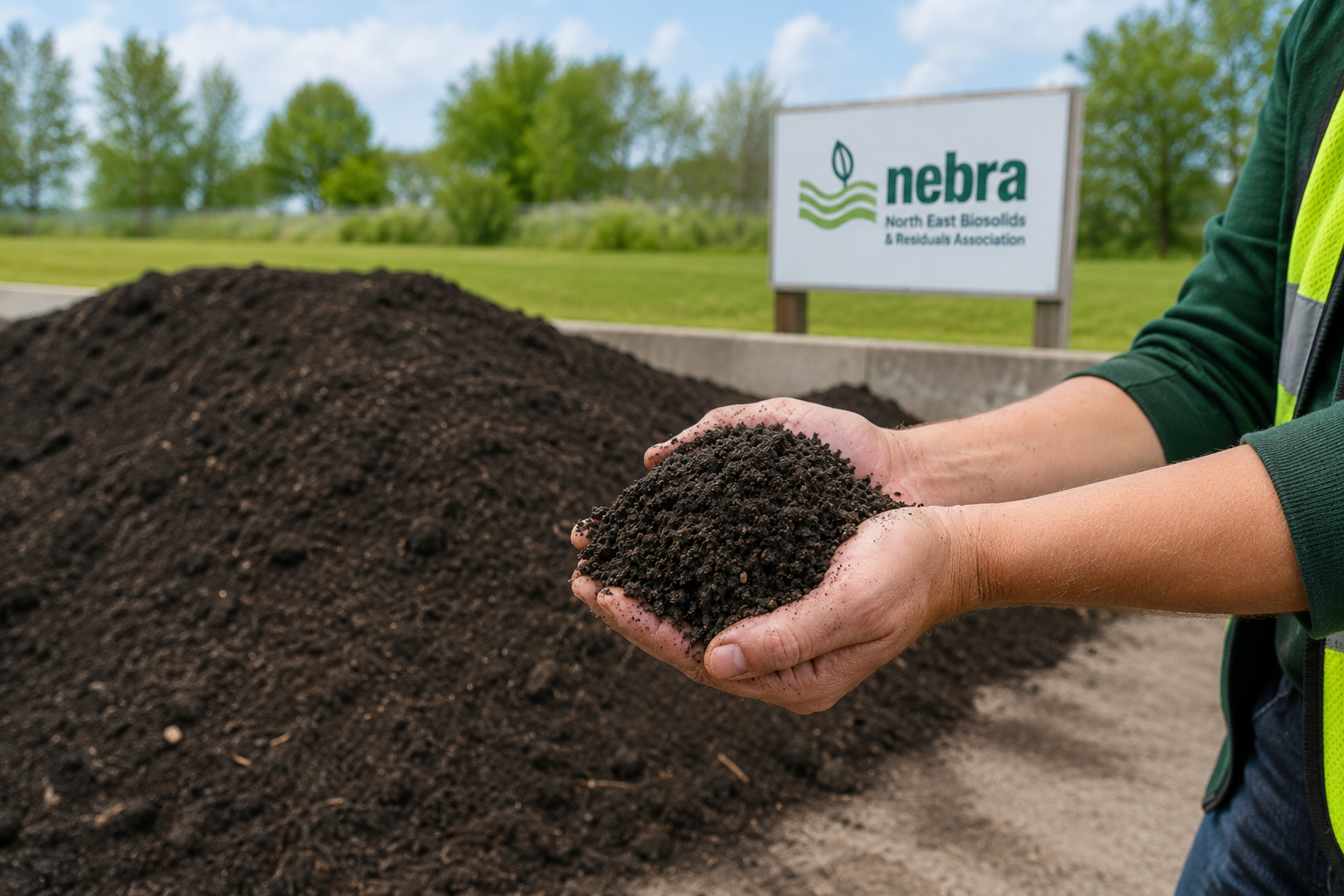
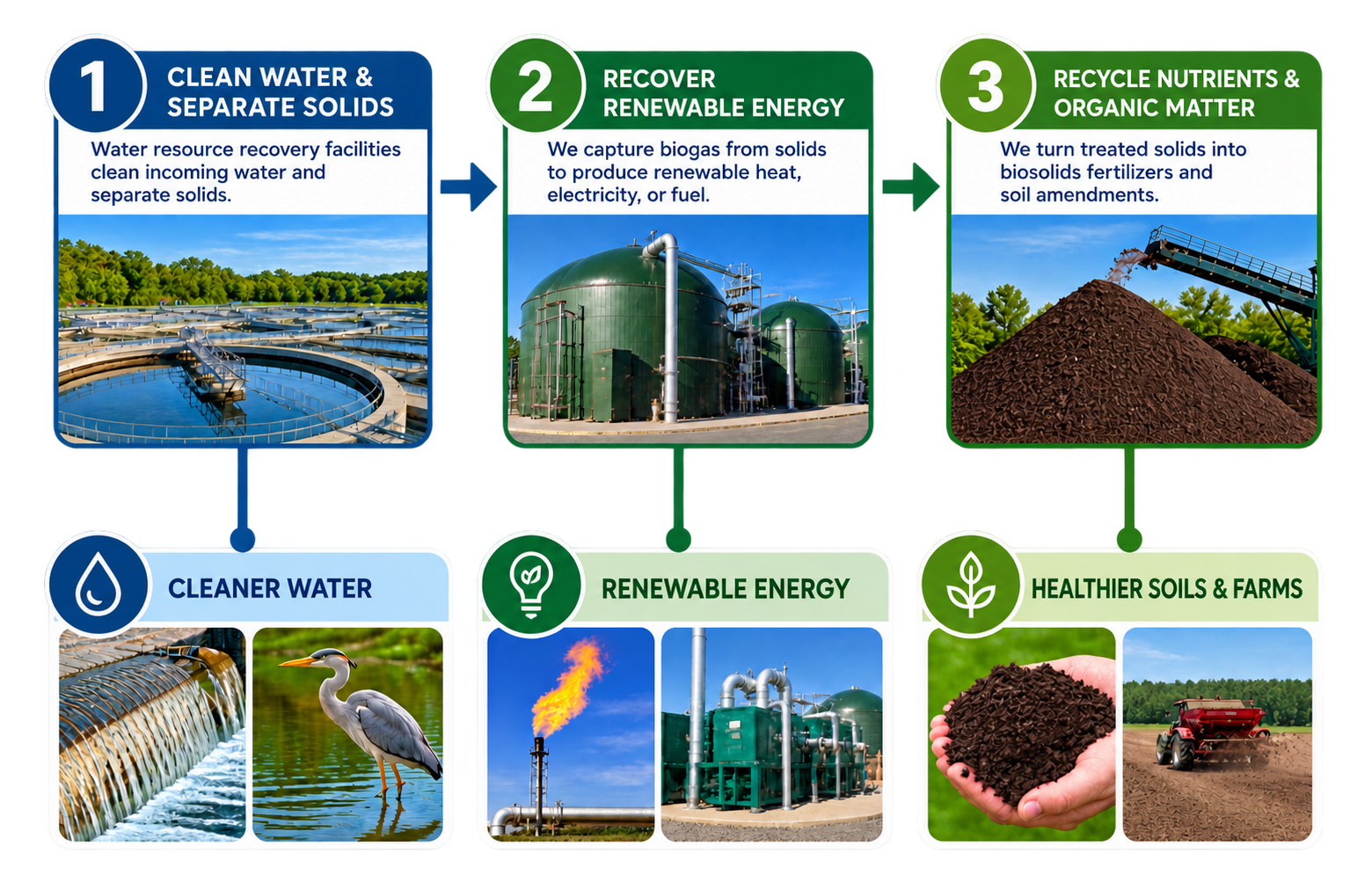
Biosolids are the nutrient-rich organic byproducts resulting from wastewater treatment that have been treated and tested to meet strict federal and state or provincial standards for use as fertilizers and soil amendments. Biosolids provide essential plant nutrients and organic matter to soils. They can also be used to produce renewable energy through digestion and production of methane (“biogas”) or by drying and thermal processing.
Throughout the U. S. and Canada, biosolids, septage, paper mill residuals, composts, and other organic residuals are commonly recycled to soils, with tangible impact:
Reduce chemical fertilizer & pesticide use
Strengthen farm economies
Restore vitality to degraded lands
Divert residuals every community produces
Enhance soil health
Recycle nutrients
Sequester carbon
Mitigate climate change
“Our towns and cities are always going to have to deal with managing waste.
The more we can divert to being useful—clean, safe, and valuable—the better.”
—Janine Burke-Wells, NEBRA Executive Director
BIOSOLIDS BASICS


40+ years of scientific research
Today’s policy governing the beneficial use of biosolids rests on more than forty years of scientific research, review, and debate. As more jurisdictions, universities, and scientists study biosolids, current laws and best practices catch up to reflect a growing consensus of negligible risk.
Still, healthy debate continues, and new angles continue to emerge on the biosolids and residuals recycling. At NEBRA, we applaud and participate in the robust scientific exploration that leads to even greater outcomes.
Several key documents outline the scientific basis for biosolids management. These include the U. S. EPA risk assessment and reviews by expert panels of the National Research Council of the U. S. National Academies of Science.