
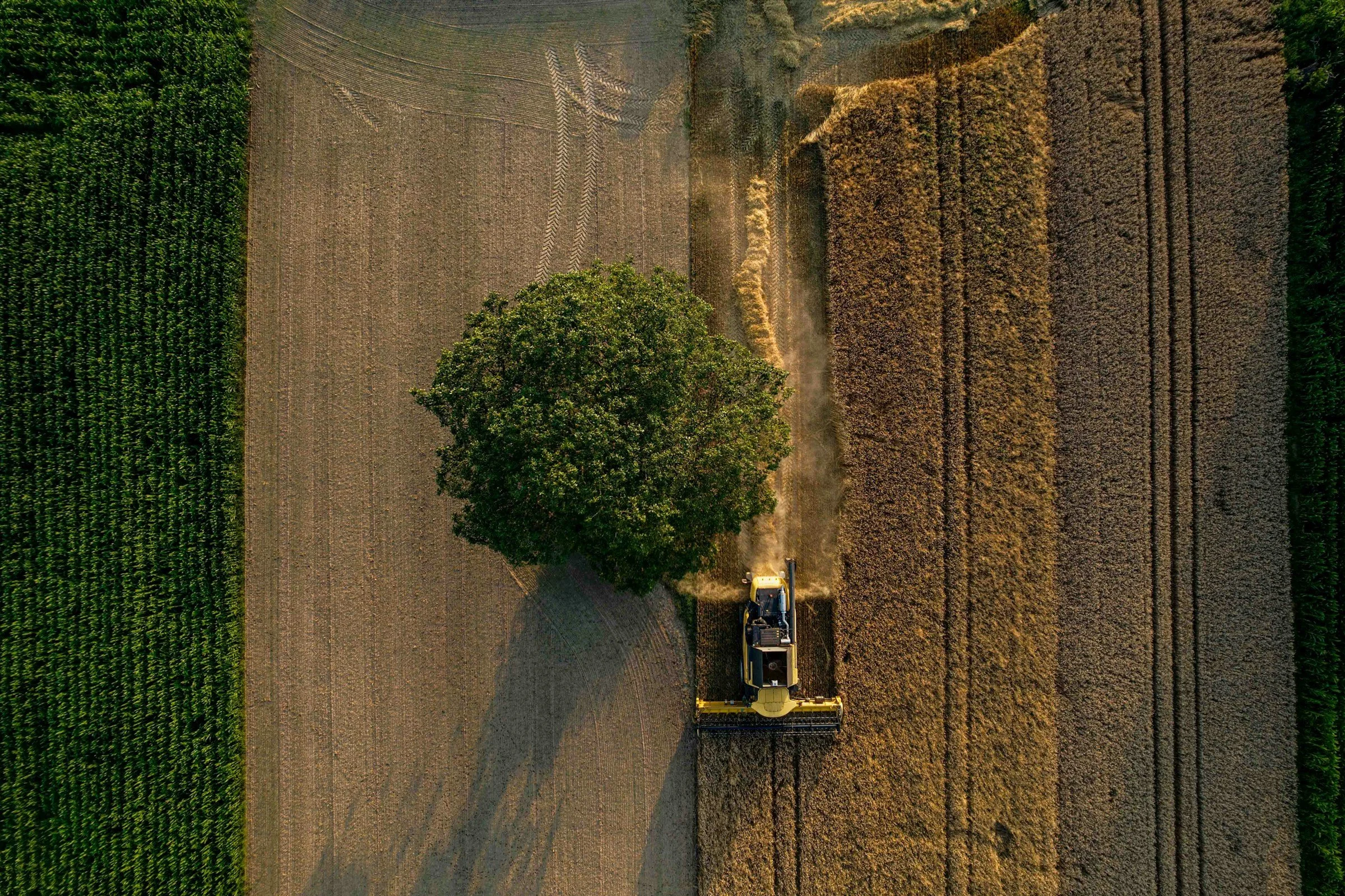
Biosolids are used in bulk on farms, just like animal manures.
Bulk Biosolids Sources:
New England & NY:
Agresource
Casella Organics
Harvest Power
quasar energy group
Resource Management Inc.
Denali Farmington
Atlantic Canada:
N-Viro Soil
Transaqua
Ontario: Lystek
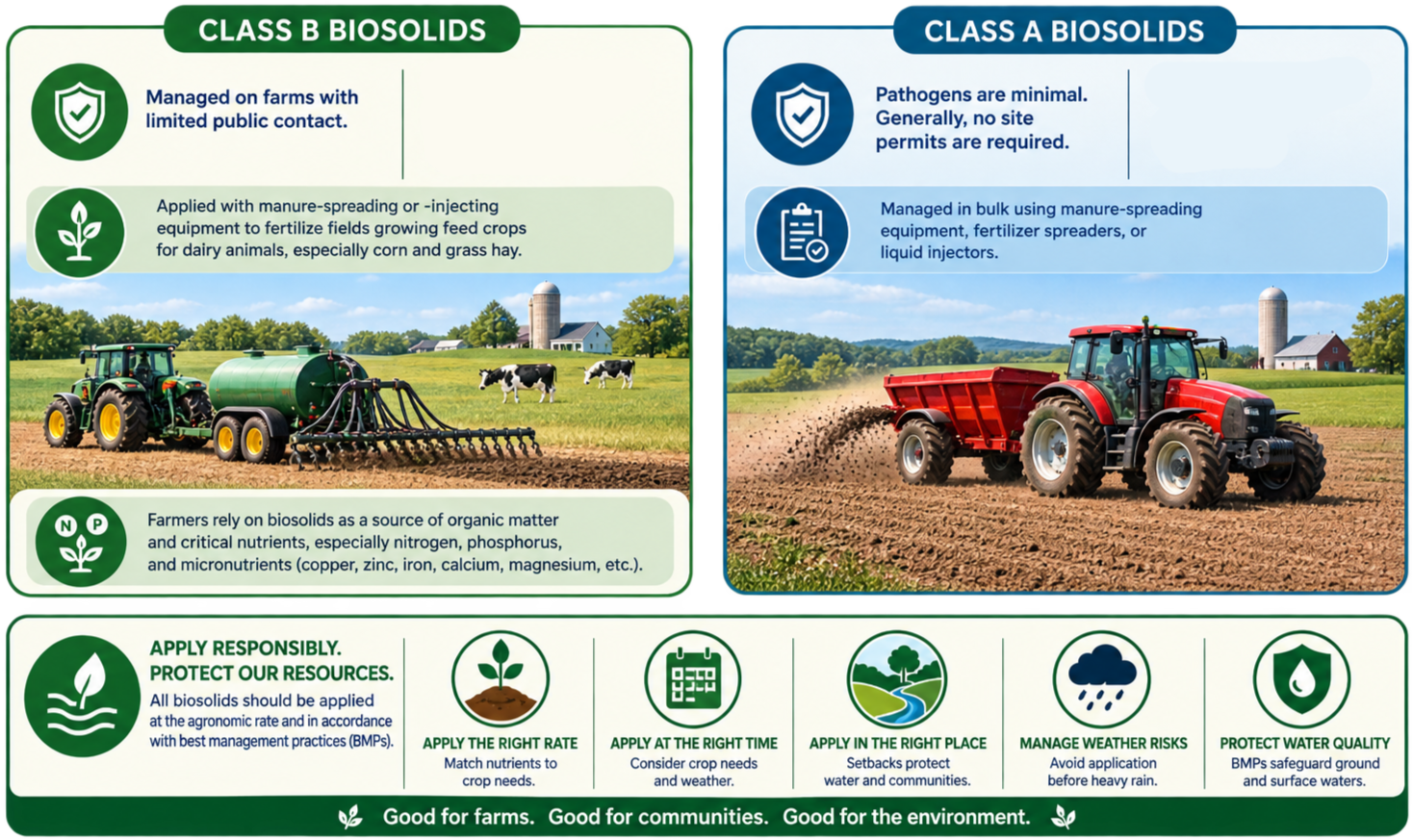
Most Class B biosolids are used on farms, on sites with little public contact.
In New England and eastern Canada, Class B biosolids are commonly applied with typical manure-spreading or -injecting equipment to help fertilize fields growing feed crops for dairy animals, especially corn and grass hay. Farmers rely on biosolids as one more source of organic matter and critical nutrients, especially nitrogen, phosphorus, and micronutrients (copper, zinc, iron, calcium, magnesium, etc.)
Some Class A biosolids are managed in the same ways as Class B biosolids: in bulk, applied with manure-spreading equipment, fertilizer spreaders, or liquid injectors. Generally, site permits are not required for Class A biosolids, because pathogens are minimal.
All biosolids should be applied at the agronomic rate and in accordance with best management practices (BMPs), ensuring the optimum application of nutrients for the crop to be grown while protecting ground and surface waters.
Resources:
Biosolids as Fertilizer Alternative (Farm Progress, 2008)
Land Application of Class B Biosolids at a NH Dairy Farm (above)
