
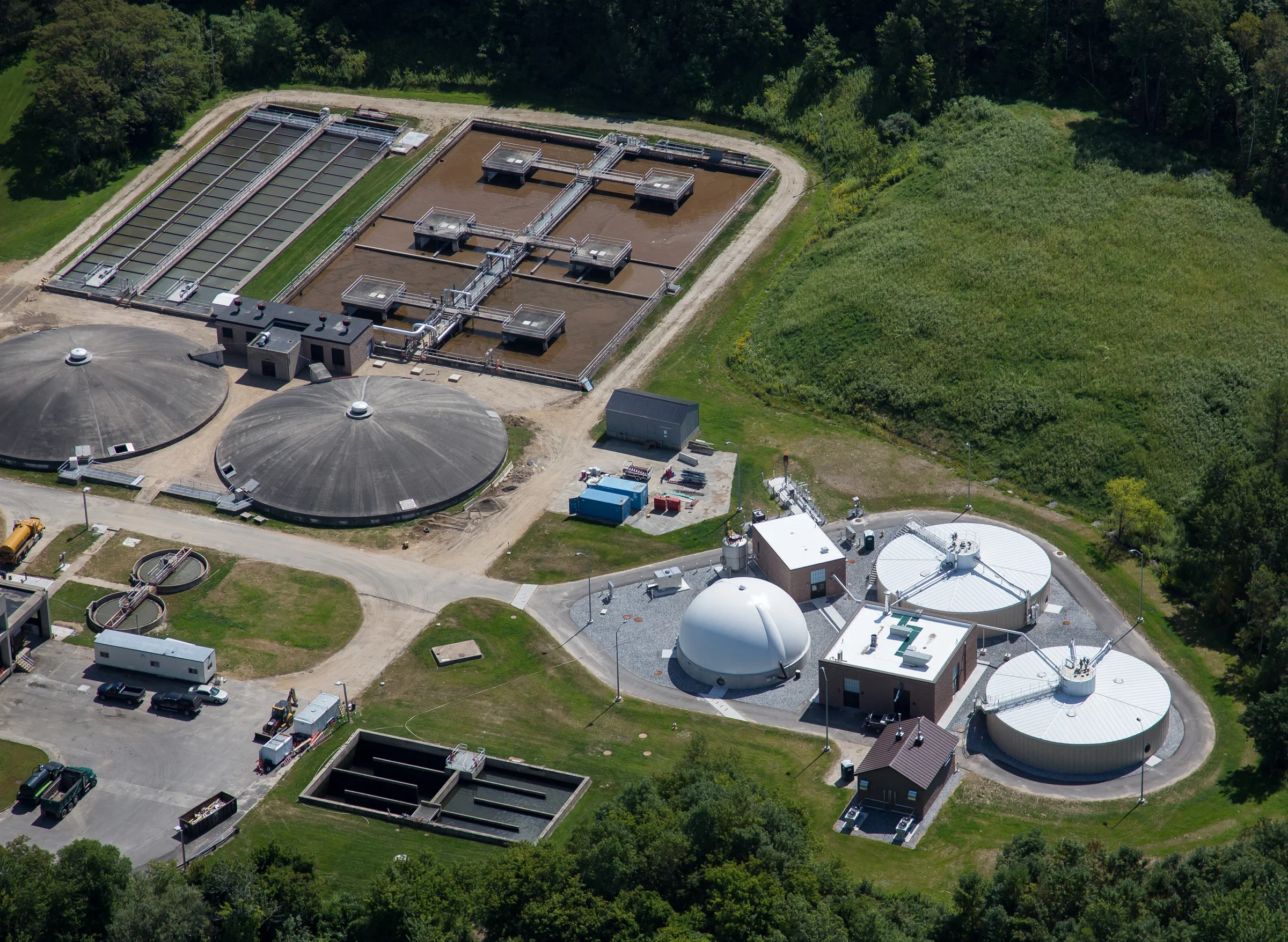
The LACWA water resource recovery facility, with new anaerobic digestion complex (white gas dome & 2 round digesters).
The Lewiston-Auburn Clean Water Authority began treating wastewater for the cities of Lewiston and Auburn, Maine, in 1974. The facility currently treats an average of ~12 million gallons per day (MGD) from residential, commercial, and industrial sources in both cities.
During the first four years of operation, the wastewater solids separated in the facility’s primary and secondary treatment processes were landfilled. In 1978, LACWA began treating the nutrient-rich solids with lime to meet the quality requirements of federal Class B standards. Biosolids can be classified as Class A or Class B based on their pathogen content, and their subsequent use is strictly designated by their classification. As a Class B product, the Lewiston-Auburn biosolids are approved for agricultural use and are applied to area permitted agricultural fields.
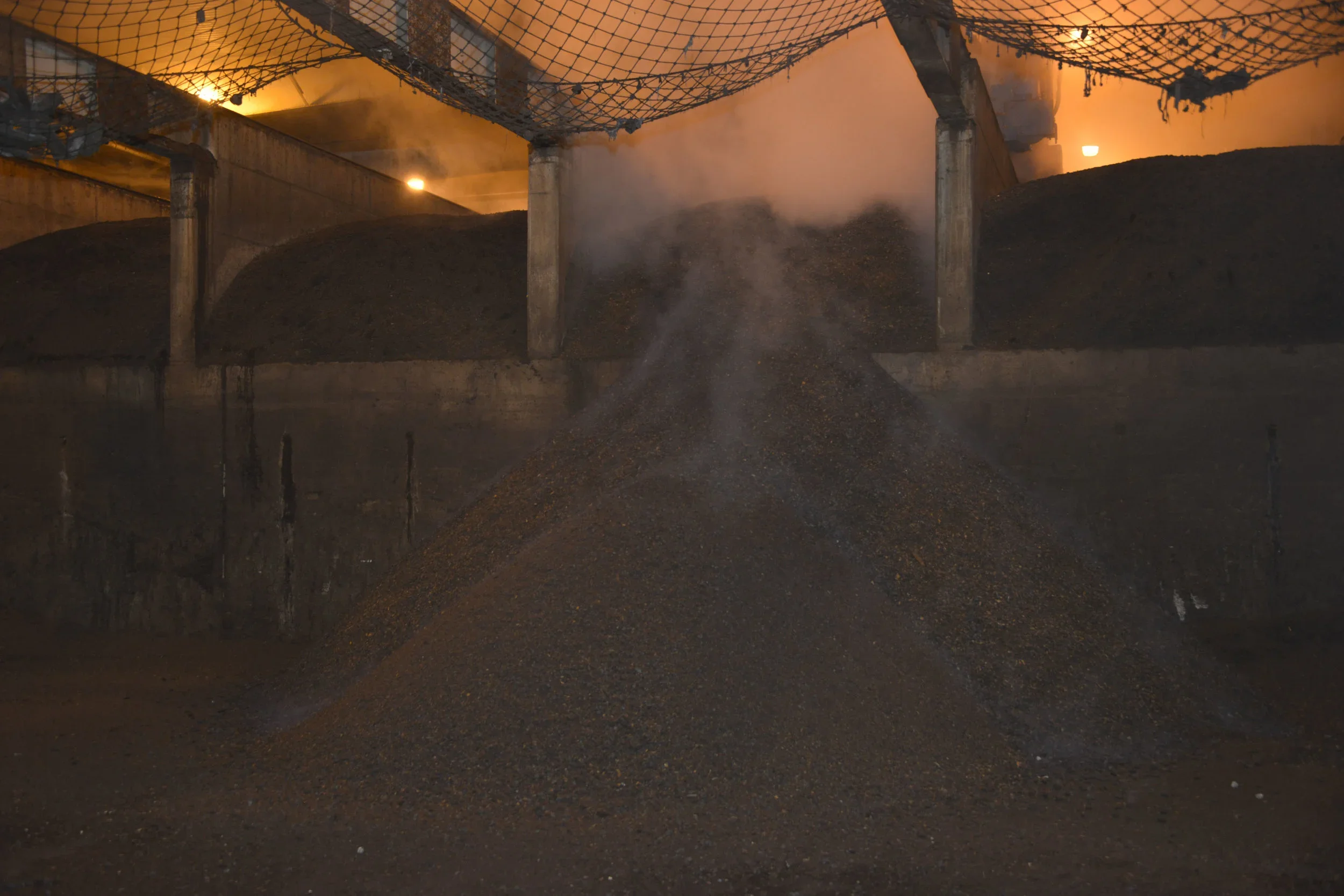
Steaming piles of fresh compost at the end of the enclosed, high-tech biosolids compost facility in Auburn.
By the early 1980s, up to 100% of the biosolids were being land applied, but this number gradually declined over that decade. In 1993, to increase the rate of biosolids recycling, a biosolids composting facility was developed in Auburn. This facility has processed large portions of LACWA biosolids ever since, creating a compost product valued by homeowners, nurseries, landscapers, and contractors.
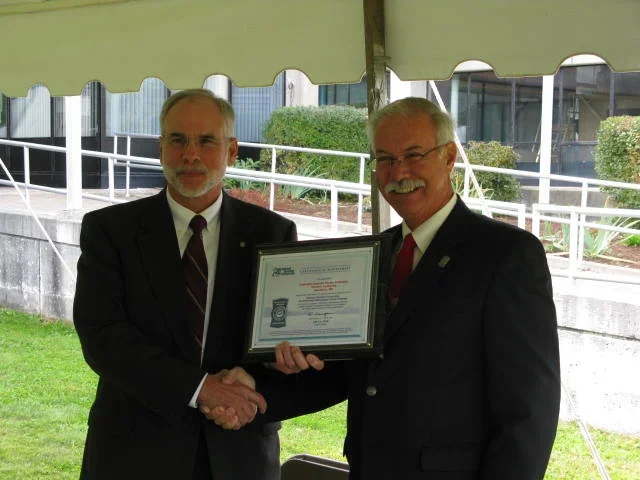
Phil Nadeau, then Chair of the LACWA Board, received National Biosolids Partnership (NBP) certification from Jim Cox of the NBP Biosolids Management Program.
In 2013, LACWA became the first municipal wastewater treatment operation in Maine to process solids through anaerobic digestion. For this, LACWA was recognized in 2014 with a Governor’s Award for Environmental Excellence. Two new digesters reduce the total solids produced by the LACWA facility by about half and replace the need for lime stabilization. The resulting biogas is used in a combined heat & power (CHP) system to generate electricity and heat. The Class B product from the digesters is a lower-odor, consistent product in high demand by area farmers.
In 2017, LACWA expects to land apply most of its biosolids as Class B material on farms. Meanwhile, the composting facility is used to process other communities' solids, continuing to make fine compost while generating tipping-fee revenue. With savings on land application management costs and new revenues, LACWA is spending an estimated $960,000/year less on solids management. Such diverse biosolids production and utilization makes LACWA a leader in the region in resiliency and sustainability.
LACWA’s success can be traced to an effective Board and leadership. Clayton ("Mac") Richardson, Superintendent of the facility since the early 1990s, has long recognized the importance of diversifying biosolids management options: it “gives him flexibility in controlling the flow of biosolids…. facility operators can easily keep up with the routine maintenance…. the dual process operation saves him money and helps generate consistently high quality products.” He has recognized the importance of good neighbor policies: “by avoiding land application of Class B biosolids during days when residents are more likely to be outdoors, they have eliminated almost all odor complaints” (NEBRA, 2001: Saving Soil).
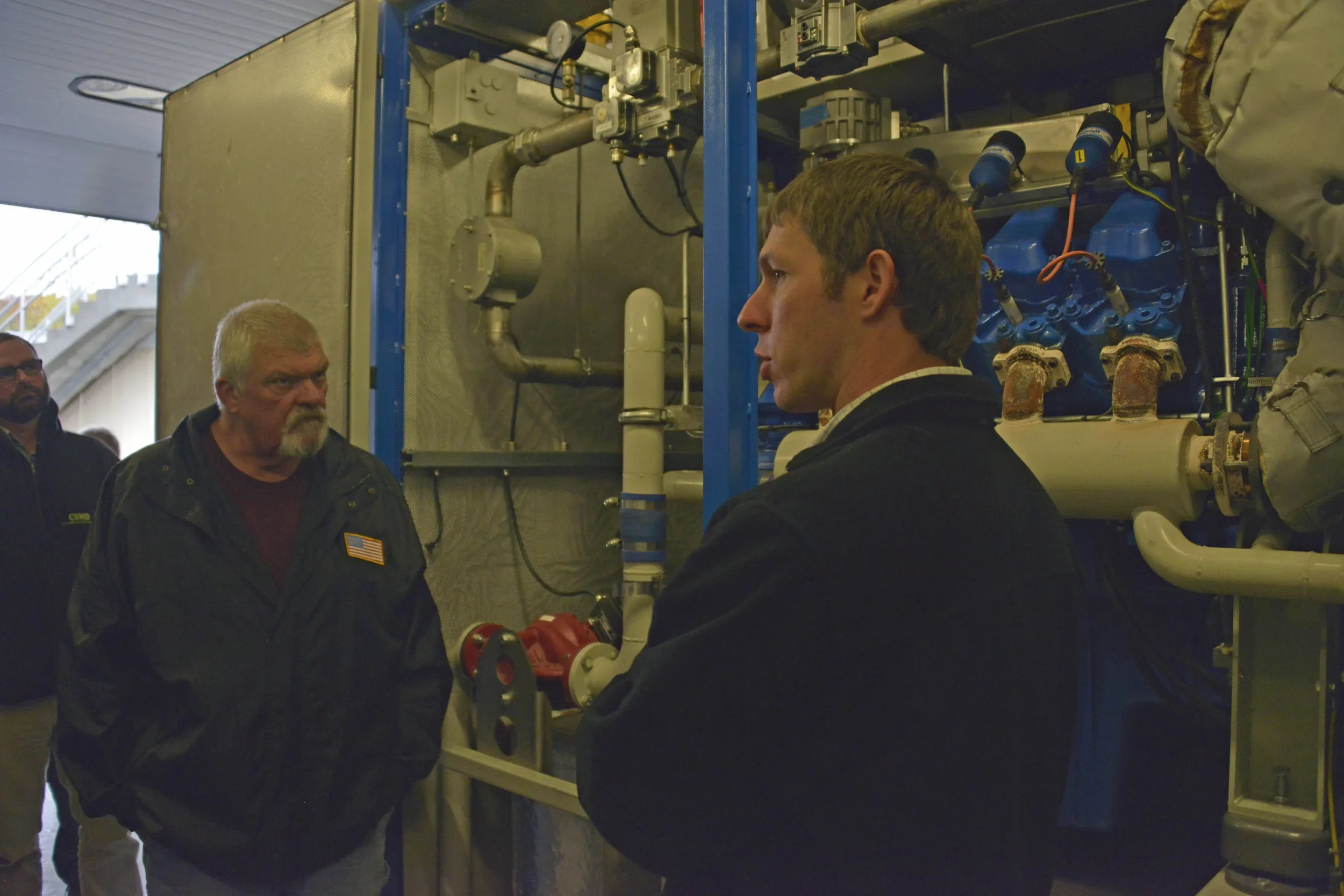
Travis Peaslee, Assistant Superintendent, right, tours the new engine generator at the LACWA CHP facility.
Beginning in 2008, LACWA’s commitment to best practices reached for the highest level in the biosolids profession by voluntarily instituting a National Biosolids Partnership (NBP) Environmental Management System (EMS). LACWA received Gold-Level recognition in 2010. A few years later, having realized all the benefits they could from the system, Mac and his staff let go of the certification process. They continue to utilize the best parts of the EMS in daily operations.
Mac’s knowledge, experience, and leadership at LACWA and within several professional organizations led to his receiving the NEWEA Biosolids Management Achievement Award for 2016.
The LACWA biosolids management program is one of the most stable, resilient, and publicly-supported biosolids management programs anywhere in North America. And its future looks bright, as the next generation of leadership has grown within the LACWA organization.
